Saturday, August 25, 2012

Our Support for Human Rights


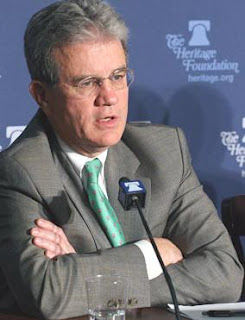
Senator Tom Coburn has written to us saying we can't count on his support for the UN Convention on the Rights of Persons with Disabilities. We're disappointed, of course. But, we understand that Dr. Coburn has a more limited perspective on human rights than we do. He is not alone in that regard.

In contrast, the UN Association has been a long-time supporter of the Universal Declaration of Human Rights, the most comprehensive and most recognized statement of human rights in our world today. Each year, along with people around the globe, we are proud to co-sponsor various human rights-themed events -- like our annual observance of Human Rights Day (December 10th).

Our support for the Universal Declaration is informed by the Ninth Amendment of the U.S. Constitution which recognizes that people possess unenumerated rights not specifically mentioned in the original document:  "The enumeration in the Constitution, of certain rights, shall not be construed to deny or disparage others retained by the people."

It also grows out of our appreciation for the long struggles of women, racial minority groups, immigrants, workers, and others who have had to assert their right to be given equal consideration in society.

Dr. Coburn denies that people have fundamental rights such as the right to an adequate standard of living (a point he made in his letter to us). To Coburn and others with his philosophy, people should not expect to enjoy the right to an education or to earn a living through their labor -- liberties that Coburn calls "positive rights" -- because these rights are, in his words, "...incompatible with the Constitution’s definition of rights."

Well, obviously, that is a point of disagreement with our good senator.

Dr. Coburn's view is contradicted by the assessment of every American president since Harry Truman (who issued the first Presidential Proclamation for Human Rights Day on December 10, 1949).

In his Proclamation, President Truman stated that "the attainment of basic rights for men and women everywhere is essential to the peace we are seeking."

Truman's words were echoed most eloquently by Ronald Reagan in his Human Rights Day proclamation of 1985:

"We pray that one day all nations of the earth may share with us the joys and rewards of living in free societies, and we resolve not to rest from our labors until the most noble longings of the human spirit, those for freedom of belief and expression, are fully realized."

Last year, President Obama added his voice:

"In the 63 years since the global community came together in support of human dignity and adopted the Universal Declaration of Human Rights, our futures have grown increasingly interconnected.  We have a stake not only in the stability of nations, but also in the welfare of individuals.  On this anniversary, we recognize human rights as universal, and we stand with all those who reach for the dream of a free, just, and equal world."

Although Senator Coburn's limited view of rights may be out of step with modern American presidents, it does seem to be a sincere expression of his political philosophy. For example, it is consistent with an opinion he expressed at a Town Hall meeting in Tulsa earlier this month when he questioned whether Medicare and Social Security are legitimate functions of the federal government.

"If you look in the Constitution," Coburn asked the Town Hall attendees, "where is it the federal government’s role to do that? That’s number one. Number two is the way I was brought up that’s a family responsibility, not a government responsibility."

We respect Senator Coburn's right to hold his beliefs, even though we politely disagree with him.

We believe Americans in the 21st century deserve much better. We support the full scope of human rights as described in the Universal Declaration.  And, we will never retreat from our goals of peace, basic rights for men and women, and the full realization of "the most noble longings of the human spirit." 

We hope you will join us!

"The advance of freedom is the story of our time, and new chapters are being written before our eyes." 
--President George W. Bush
Human Rights Day, 2006


Sunday, August 12, 2012

More Coburn Town Hall Meetings This Week

Senator Tom Coburn has announced four more Town Hall meetings with constituents. Each of them will take place on Monday, August 13th:


Sapulpa Town Hall
9:00am-10:00am
Collins Building (2nd Floor)
317 E Lee
Sapulpa, OK 74066

Stillwater Town Hall
12:00pm-1:00pm
Wes Watkins Center
207 Wes Watkins Center
Hall of Fame and Washington
Stillwater, OK 74078

Perry Town Hall
2:00pm-3:00pm
Exchange Bank (Horizon Room)
523 Delaware Street
Perry, OK 73077

Ponca City Town Hall
4:00pm-5:00pm
City Hall, Commission Chamber
516 E Grand Ave
Ponca City, 74601


If you're able to attend any of these meetings, please ask Dr. Coburn to support the UN Convention on the Rights of Persons with Disabilities.

Thanks!

Bill Bryant, President
Oklahoma City Chapter
United Nations Association of the USA
405-760-5322


Sunday, August 5, 2012

Will Senator Coburn Support Liberty?


Discussions Continue on the Rights of Persons with Disabilities


Have You Called Senator Coburn's Office Yet?  202-224-5754


The U.S. Senate went into recess until after Labor Day without taking any action on the Convention on the Rights of Persons with Disabilities (CRPD).

During August, discussion about ratification of the treaty will continue -- but it will take place in our own communities in Oklahoma rather than in the halls of Congress.  We expect the treaty to be a topic at some of the Town Hall meetings that Senator Coburn will host this week.  You can see his Town Hall meeting schedule here ... He is planning for meetings with constituents in Tulsa, Vinita, Grove, Claremore, Poteau, and McAlester.

So far, we haven't found any statements from Senator Coburn promising that he will vote for ratification. But, we think he will be supportive.  Here's why.

First, Coburn is a champion of individual freedom.  We know this because he has written about his commitment to protecting liberty.  This is from his website:

"Liberty and freedom for the individual... are what make the United States and our Constitution unique in the history of man. America, like no other nation before, is founded on the principle that the individual has basic rights that are granted by our Creator that no government may take away or compromise."

Also, Senator Coburn issued a report last month that praised the work of the Oklahoma Department of Rehabilitation Services for its efforts to help people with disabilities gain employment.  So, we know he is a supporter of equality in the workplace -- one of the major goals of the Convention on the Rights of Persons with Disabilities.

Second, Senator Coburn has a well-known reputation as a budget hawk.  We think he will be pleased by another feature of the CRPD: "The treaty comes at no cost to the United States."  

Those are the words of former Senator Bob Dole, writing in the Salt Lake City Deseret News. You can read the full text of Senator Dole's commentary here.

Mr. Dole, who has lived with a disability since World War Two, has thought deeply about the benefits of the CRPD.  He points out that the treaty not only helps to protect the rights of people with disabilities.  It will also expand the market for accessibility devices:

"In fact, it will create a new global market for accessibility goods. An active U.S. presence in implementation of global disability rights will promote the market for devices such as wheelchairs, smart phones and other new technologies engineered, made and sold by U.S. corporations."

This is an angle that might appeal to Dr. Coburn, who was the manufacturing manager at the Ophthalmic Division of Coburn Optical Industries during the 1970's. We think he knows a thing or two about the value of assistive technology.

If you get a chance to attend one of Dr. Coburn's Town Hall meetings this month, please ask him to support the Convention on the Rights of Persons with Disabilities.  And, please report to us on the Senator's answer.

Thanks!

Bill Bryant
President, OKC Chapter
United Nations Association of the USA
405-760-5322


Sunday, July 29, 2012

Good News for Rights Advocates


The Convention for the Rights of Persons with Disabilities is on Course for Ratification in the U.S. Senate -- Maybe This Week! 

Calls are Needed to Senator Coburn ... (202) 224-5754


The Convention on the Rights of Persons with Disabilities (CRPD) came up for a vote in the Senate Foreign Relations Committee last week, and it won easy approval.  By a 13 to 6 margin, the treaty gained bi-partisan support, and Senator John Kerry (chairman of the committee) indicated that he will seek a vote of the full Senate within days.  

A 2/3 vote in favor of the treaty is needed for ratification.

To our knowledge, Senator Coburn has not taken a public position on the CRPD. He is not generally known as an advocate for people with disabilities, yet he has spoken favorably of some international agreements -- particularly those that serve to protect intellectual property rights. So, there is a possibility that he will vote "yes" on the CRPD.  (Senator Inhofe disappointed us by voting against the treaty when it received a hearing in the Foreign Relations Committee).

To contact Dr. Coburn, you can use the webform that appears on his website:

www.coburn.senate.gov/public/index.cfm/contactsenatorcoburn?p=ContactForm

Or, you can call his Washington office directly ... 


(202) 224-5754

When you contact Senator Coburn, please feel free to mention these three points:

(1)  This treaty will help bring the rest of the world up to American standards -- guaranteeing that disability is not an arbitrary barrier to employment, education, etc. 

(2)  The Foreign Relations Committee is recommending that the treaty be ratified with a reservation stating that, “current United States law fulfills or exceeds the obligations of the Convention.” 

(3)  Another reservation adopted by the committe states that the treaty does not address “the provision of any particular health program or procedure,” meaning the treaty doesn't create any new abortion rights beyond the duty not to discriminate against people with disabilities.

The third point is particularly important since some treaty skeptics have raised opposition to the treaty on the grounds that it recognizes the right of equal access to reproductive health services. The Foreign Relations Committee has tried to make clear that the treaty's reference to reproductive health is intended to cover the full range of health services in this category -- including fertility treatments, etc. -- without singling out any procedure for special consideration. 

Your action on this treaty will help to assure ratification by the United States Senate. 

Moreover, it will help to protect the rights of people with disabilities around the world -- including the rights of Americans traveling abroad. 

Thanks! 

Tuesday, July 24, 2012

What's in the CRPD?


In a previous article, we encouraged all of our members and friends to call or write Senator Inhofe urging him to support the Convention on the Rights of Persons with Disabilities. In passing, we mentioned that there is some opposition to the Convention -- even though the treaty enjoys broad support from the American public. 

In the interest of educating about the purpose and contents of the treaty, we would like to offer this item-by-item analysis of the objections that have been raised by treaty opponents.  Here is our response to an article published by the Home School Legal Defense Association, a group that is focused on policy advocacy. 

We call this article:

Ten Specific Reasons Why We Support
The Convention on the Rights of 
Persons with Disabilities

A response to an article published at
http://www.hslda.org/docs/news/2012/201205250.asp

OBJECTION 1.
Any remaining state sovereignty on the issue of disability law will be entirely eliminated by the ratification of this treaty. The rule of international law is that the nation-state that ratifies the treaty has the obligation to ensure compliance. This gives Congress total authority to legislate on all matters regarding disability law -- a power that is substantially limited today. Article 4(5) makes this explicit.

RESPONSE:
For more than 20 years, our nation has recognized that the rights of people with disabilities transcend state boundaries, and so federal laws have been written to effectively promote and defend those rights.  Few people want to go back to the time before the passage of the Americans with Disabilities Act.  The requirements of the Convention on the Rights of Persons with Disabilities are completely congruent with present American law.  That is why the treaty has the bi-partisan support of prominent Americans, including former President George H.W. Bush, former Senator Bob Dole, Senator John McCain, and many others. 

OBJECTION 2.
Article 4(1)(a) demands that all American law on this subject be conformed to the standards of the UN.

RESPONSE:
Section 4(1)(a) of the treaty does *not* refer to "standards of the UN." Rather, the States Parties agree "To adopt all *appropriate* legislative, administrative and other measures for the implementation' of the rights recognized in the convention...."  (Emphasis added). 


All States Parties (nations which sign the treaty) agree to "ensure and promote the full realization of all human rights and fundamental freedoms for all persons with disabilities...."

OBJECTION 3.
Article 4(1)(e) remands that “every person, organization, or private enterprise” must eliminate discrimination on the basis of disability. On its face, this means that every home owner would have to make their own home fully accessible to those with disabilities. If the UN wants to make exceptions, perhaps they could. But, on its face this is the meaning of the treaty.

RESPONSE:
American laws on disability rights are among the most progressive in the world, and we do not expect any changes as a result of joining the Convention on the Rights of Persons with Disabilities.  The Convention has *no* requirement for individual home owners to retrofit their houses to make them fully accessible.  Rather, under this section of the treaty, the United States and other nations will agree to "...take all *appropriate* measures to eliminate discrimination on the basis of disability by any person, organization or private enterprise." (Emphasis added). The treaty recognizes the concept of "reasonable accommodation" -- an idea that most Americans are familiar with.  It is a legal concept that is well-developed under United States law.  

OBJECTION 4.
Article 4(1)(e) also means that the legal standard for the number of handicapped spaces required for parking at your church will be established by the UN — not your local government or your church.

RESPONSE:
There is no place in the Convention that refers to the number of parking spaces that must be made available to people with disabilities. Under the treaty, the U.S. government will be responsible for implementing appropriate measures to protect the rights of people with disabilities.  The UN has no authority under this treaty to directly enforce rules about parking spaces.  It does not revoke or remove the authority of local governments to establish reasonable regulations in this regard. 

OBJECTION 5.
Article 4(2) requires the United States to use its maximum resources for compliance with these standards. The UN has interpreted similar provisions in the UN Convention on the Rights of the Child to criticize nations who spend too much on military issues and not enough on social programs. There is every reason to believe that the UN would interpret these provisions in a similar fashion. The UN believes that it has the power to determine the legitimacy and lawfulness of the budget of the United States to assess compliance with such treaties.

RESPONSE:
Article 4 of the treaty describes the "general obligations" of each State Party. Under the treaty, the United States will agree to take measures to achieve the "full realization" of the rights of people with disabilities. Within this context, the treaty recognizes that full implementation may occur "progressively," and there is an explicit recognition that nations are constrained by "available resources." Under the treaty, the UN has no authority to dictate the budget of the United States or any state or local government within our federal system. 

OBJECTION 6.
Article 6(2) is a backdoor method of requiring the United States to comply with the general provisions of the UN Convention on the Elimination of All Forms of Discrimination against Women. This treaty enshrines abortion rights, homosexual rights, and demands the complete disarmament of all people.

RESPONSE:
The treaty does not incorporate the requirements of the Convention on the Elimination of All Forms of Discrimination Against Women -- which is entirely separate from the Convention on the Rights of Persons with Disabilities.  Section (2) of Article 6 reads as follows: "States Parties shall take all appropriate measures to ensure the full development, advancement and empowerment of women, for the purpose of guaranteeing them the exercise and enjoyment of the human rights and fundamental freedoms set out in the present Convention." 

OBJECTION 7.
Article 7(2) advances the identical standard for the control of children with disabilities as is contained in the UN Convention on the Rights of the Child. This means that the government -- acting under UN directives —- gets to determine for all children with disabilities what the government thinks is best.


Additionally, under current American law, federal law requires public schools to offer special assistance to children with disabilities. However, no parent is required to accept such assistance. Under this section the government -- and not the parent -- would have the ultimate authority to determine if a child with special needs will be homeschooled, attend a private school, or be required to accept the program offered by the public school.

RESPONSE:
Article 7 of the treaty addresses the topic of "Children with Disabilities."  Section (2) of this article states: "In all actions concerning children with disabilities, the best interests of the child shall be a primary consideration." 


The "best interest" principle is widely accepted by U.S. courts, as it is a protection against child abuse as well as undue government interference.  In the context of the Convention of the Rights of Persons with Disabilities, it should be noted that the treaty also provides protection for parents and guardians.  For example, Article 23 of the treaty addresses, "Respect For Home and the Family." 

Article 23(4) provides: "States Parties shall ensure that a child shall not be separated from his or her parents against their will, except when competent authorities subject to judicial review determine, in accordance with applicable law and procedures, that such separation is necessary for the best interests of the child. In no case shall a child be separated from parents on the basis of a disability of either the child or one or both of the parents." 

Article 24 of the treaty ("Education") establishes the principle that all people with disabilities have the right to an education, and this right should be realized "...without discrimination and on the basis of equal opportunity." So, to the extent that an able-bodied child may enjoy an education at home, the Convention on the Rights of Persons with Disabilities will serve to equally allow a child with a disability to enjoy the same privilege.

OBJECTION 8.
The United States, as a wealthy nation, would be obligated to fund disability programs in nations that could not afford their own programs under the dictates of Article 4(2). This is what “the framework of international cooperation” means.

RESPONSE:
As previously noted, Article 4 of the treaty describes "general obligations" of State Parties.  It does not lay out specific requirements for how international cooperation must take place. The concept of "international cooperation" is addressed in Section 32 of the Convention on the Rights of Persons with Disabilities, and it includes a list of suggested measures which nations could agree to pursue -- but none of these measures are described as mandates.  And, in any case, the treaty provides that each nation is responsible for fulfilling its own obligations under the treaty.  

Also, under the principle of national sovereignty, the UN has no authority to dictate the budget of the United States nor of any other member state of the United Nations. 

OBJECTION 9.
Article 15’s call for a ban on “inhuman or degrading treatment or punishment” is the exact same language used in the UN CRC which has been authoritatively interpreted to ban any spanking by parents. It should be noted that Article 15 is not limited to persons with disabilities. It says “no one shall be subjected to … inhuman or degrading treatment.” This means that spanking will be banned entirely in the United States.

RESPONSE:
The complete text of Article 15 is: 


"Freedom from torture or cruel, inhuman or degrading treatment or punishment


"No one shall be subjected to torture or to cruel, inhuman or degrading treatment or punishment. In particular, no one shall be subjected without his or her free consent to medical or scientific experimentation.


"States Parties shall take all effective legislative, administrative, judicial or other measures to prevent persons with disabilities, on an equal basis with others, from being subjected to torture or cruel, inhuman or degrading treatment or punishment." 

The prohibition on "inhuman or degrading treatment or punishment" appears in several laws, treaties, and international agreements. For example, an identical phrase appears in the United Nations Convention Against Torture, which has been American law since 1994.  In this sense, Article 15 does not add any new requirements that we have not already agreed to.  

As to an interpretation under the "UN CRC" (the Convention on the Rights of the Child), it should be noted that the monitoring and enforcement mechanisms of the Convention on the Rights of Persons with Disabilities are entirely separate from the enforcement mechanisms of the CRC.  The CRC treaty is monitored by a UN Committee on the Rights of the Child. In contrast, the monitoring and enforcement mechanisms of the Convention on the Rights of Persons with Disabilities are the responsibility of an 18-member Committee on the Rights of Persons with Disabilities -- with members elected by the State Parties.   

The powers of the Committee on the Rights of Persons with Disabilities are limited to receiving reports from member countries, reviewing those reports, and making its own periodic report to the UN General Assembly.  The Committee is authorized to "...make suggestions and general recommendations based on the examination of reports and information received from the States Parties." 

OBJECTION 10.
Article 25 [sic] on Education does not repeat the parental rights rules of earlier human rights treaties such as the International Covenant on Civil and Political Rights or the International Covenant on Economic, Social, and Cultural Rights. This is an important omission. Coupling this omission with the direct declaration of “the best interest of the child” standard in Article 7(2), this convention is nothing less than the complete eradication of parental rights for the education of children with disabilities.

RESPONSE:
The topic of Education is actually addressed in Article 24 of the Convention on the Rights of Persons with Disabilities. 


Article 24 does not repeat the provisions of the International Covenant on Civil and Political Rights or the International Covenant on Economic, Social, and Cultural Rights because these covenants are explicitly acknowledged in the Preamble of the Convention on the Rights of Persons with Disabilities.  

Furthermore, Article 4(4) of the Convention provides this explicit assurance: "Nothing in the present Convention shall affect any provisions which are more conducive to the realization of the rights of persons with disabilities and which may be contained in the law of a State Party or international law in force for that State. There shall be no restriction upon or derogation from any of the human rights and fundamental freedoms recognized or existing in any State Party to the present Convention pursuant to law, conventions, regulation or custom on the pretext that the present Convention does not recognize such rights or freedoms or that it recognizes them to a lesser extent." 

The members of the Oklahoma City chapter of the United Nations Association urge all our neighbors and friends to examine the text of the Convention of the Rights of Persons with Disabilities: 


http://www.un.org/disabilities/default.asp?id=199 

We ask you to review the provisions of the treaty. Evaluate them based on your own experience with respect to the needs of people who struggle with a disability. 

Then, contact our Oklahoma senators (Sen. Coburn and Sen. Inhofe) and share your independent judgment with them. 

Thanks! 

Thursday, July 19, 2012

Let's Give An Assist


Let's Give an Assist to People with Disabilities

The Rights Treaty for People with Disabilities
is Coming Up for a Vote in the U.S. Senate

Can You Call or Write Senator Inhofe?


Since the passage of the Americans with Disabilities Act in 1990, people with disabilites in our country have had greater opportunities to go to school and gain employment and to enjoy participating in life.

At the global level, the rights of people with disabilities are recognized in a treaty that was born out of the United Nations -- the Convention on the Rights of Persons with Disabilites (CRPD).

According to the United Spinal Association, "The CRPD embodies the protections and opportunities available through the Americans With Disabilities Act (ADA), but on a global scale."

(The United Spinal Association is an advocacy organization for people with spinal cord injuries, MS, ALC, polio, spina bifida, etc. It is just one of the groups of people who are pushing for ratification of the CRPD).

Article 1 of the CRPD defines the purpose of the treaty: "To promote, protect and ensure the full and equal enjoyment of all human rights and fundamental freedoms by all persons with disabilities, and to promote respect for their inherent dignity."

The treaty has gained wide support around the world. The text of the convention was approved by the UN's General Assembly in 2006. Since then, 153 heads of state have signed the CRPD, and 117 nations have ratified it. President Obama signed it on July 30, 2009.

The United States Senate hasn't ratified it yet, but that is about to change. The Foreign Relations Committee has begun hearings on the measure. Advocates have emerged. Prominent supporters of the treaty include former Senator Bob Dole (our neighbor from Kansas), former Rep. Tony Coelho, former presidential candidate John McCain, and others.

One of the key votes in the Foreign Relations Committee is held by our own Senator from Oklahoma, James M. Inhofe. Senator Inhofe isn't generally known as a great supporter of international agreements, but he has won plaudits for his compassionate concern for people with disabilities (especially veterans).

We think Senator Inhofe will cast a vote in favor of the CRPD, and we want to fortify his resolve. Plus, we know he is getting messages from people in our state who are opposed to this Convention -- so, we feel like we've got to speak up!

Can you help by calling or writing Senator Inhofe's Washington office?

Here's the phone number ...

(202) 224-4721

Here's a link to his online contact form ...
http://www.inhofe.senate.gov/public/index.cfm?FuseAction=contact.contactform


The next hearing on the CRPD hasn't yet been announced, but we expect it to take place in the next month or two. Then, a final vote in the Senate will probably occur after the elections in November.

Your contact with Senator Inhofe's office is going to make a difference.

Thanks for your support of this important effort!

Tuesday, July 17, 2012

Preliminary Survey Results


90% of Respondents 
Like the "No War on Iran" 
Billboard Campaign

Only 10 responses have been recorded so far, but already a trend is emerging.  Nine of the respondents think our OKC chapter of the UN Association should endorse the AANW's billboard campaign.  One person recorded a "Not Sure" answer. 

Most of the respondents so far have been members of our Association -- 6 out of 10. Three people describe themselves as "Not Yet" members.  

The written comments from the survey respondents reflect a variety of viewpoints.  Here is a sample: 

"I am against all wars in foreign lands. We should fight only if our shores are invaded by a foreign power. All wars are monuments to human ignorance and greed." 

"The UN Charter calls for the peaceful resolution of dispute, hence indicating a 'yes.' However, our de facto ally, Israel, has, under the Charter, the inherent right of self-defense, and, it could be argued that mere Iranian possession of nuclear weapons constitutes a grave threat to Israel, AND that UN sanctions will not suffice to deter."

"I have been disturbed about the lack of foreign relations discussion so far in the presidential candidates speeches. I like the idea of this sign. Maybe it will encourage our asking for more information from the candidates...." 

"The AANW campaign helps us get out ahead of the malcontents who would in the guise of 'defense' would reduce America to the level of nazis with even less justification."

"Direct negotiations with Iran will produce results."

"I am so happy and impressed that these groups were able to raise the funds to put up 3 signs. Not one but 3. I can't wait to see my first one."

"Any action that questions the USA's bellicose foreign policies is a very good thing." 

"Not only should your organization support the billboards in question, but you should be helping to spread the awareness that 1. it is illegal to use the threat of force, and 2. Iran is operating within their right of nuclear enrichment, under IAEA supervision...."

If you haven't answered the survey yet, you are welcome to give us your opinion.

You can find the online survey here:

http://survey.constantcontact.com/survey/a07e65e4pegh4nzx4u8/start

Thanks!